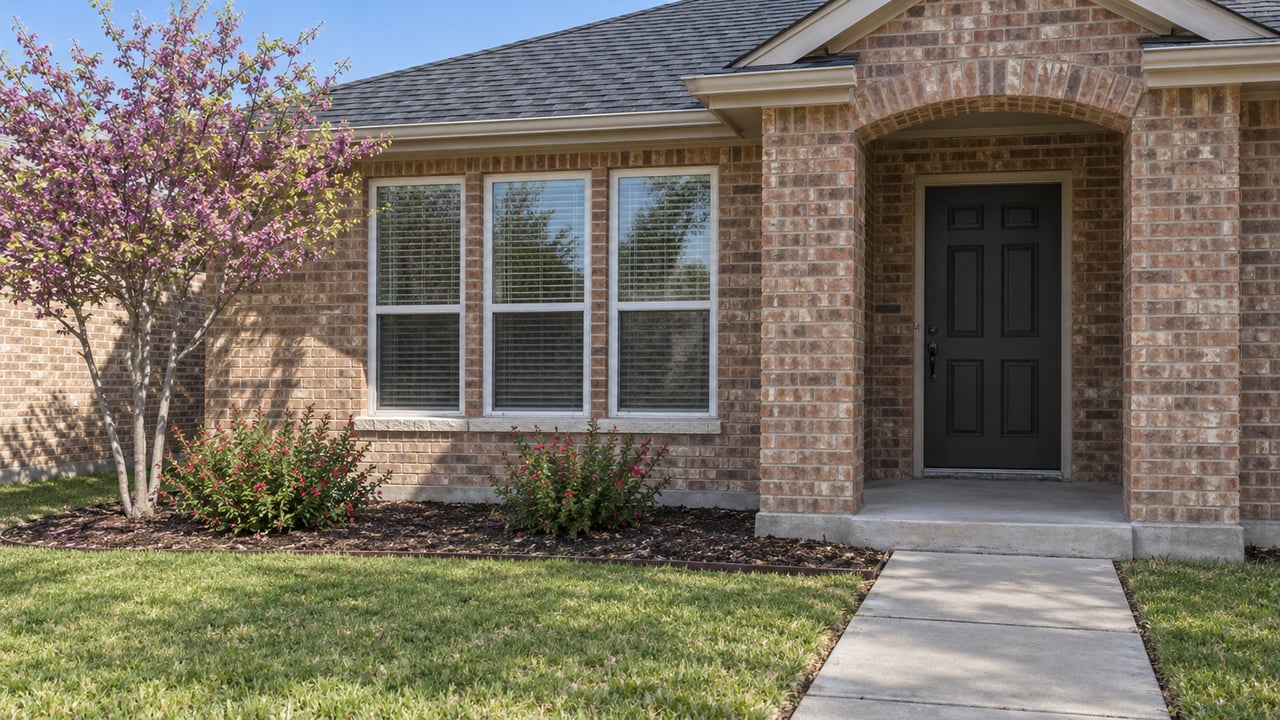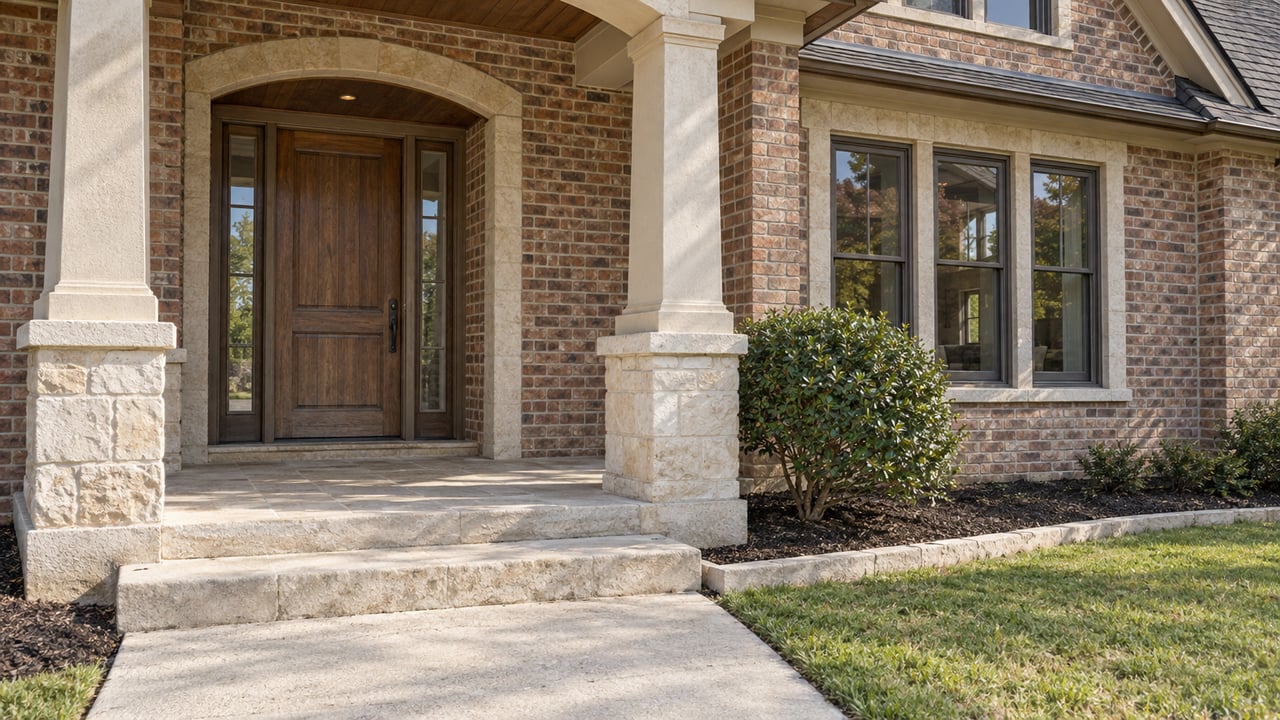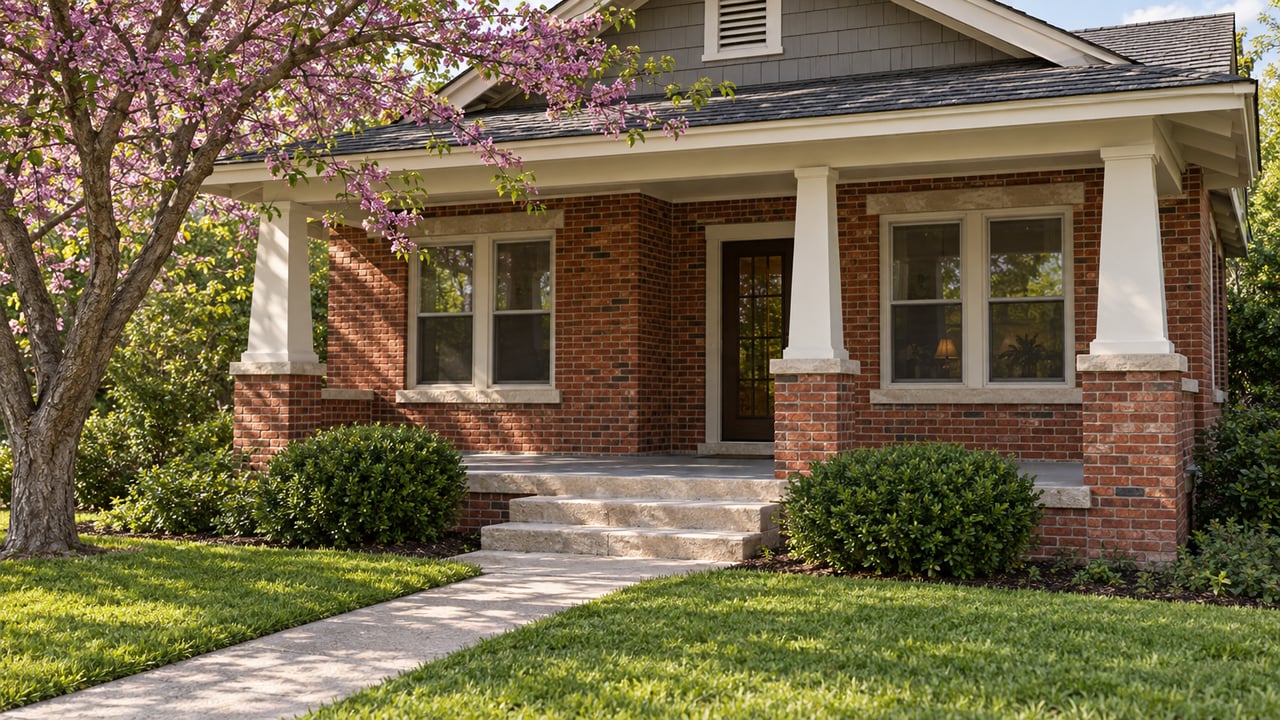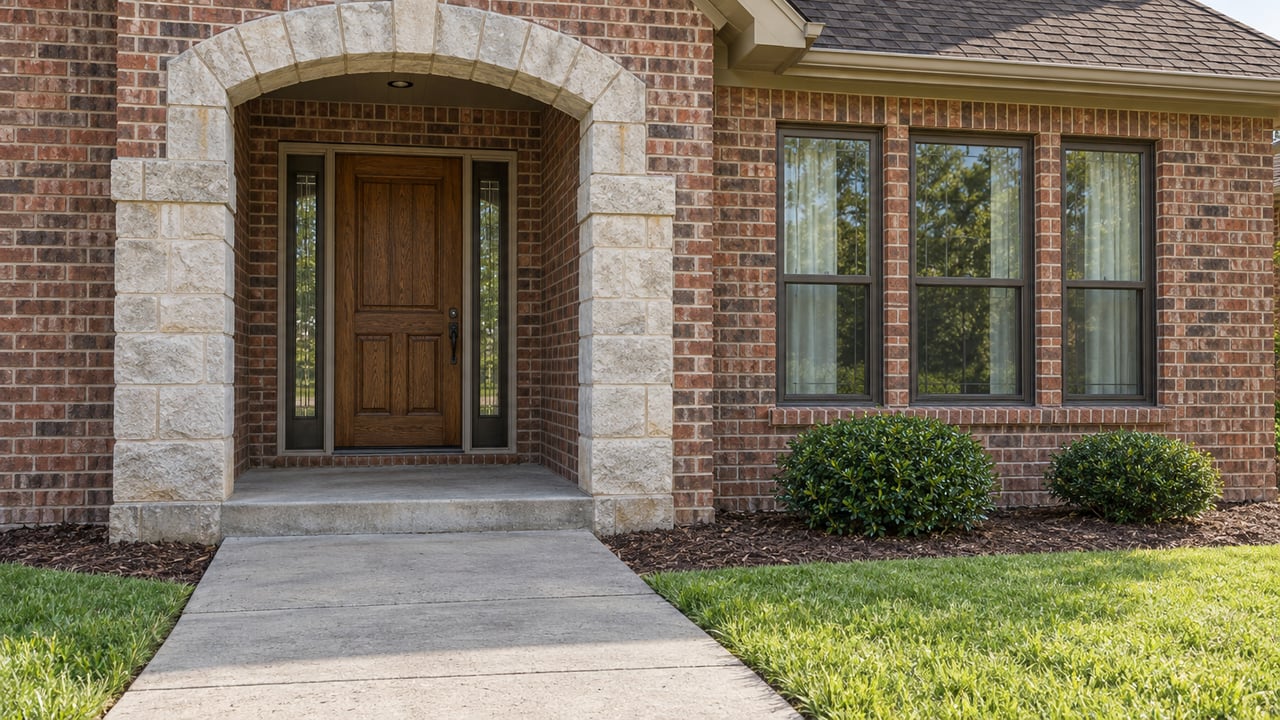
Two listings sit at $1 million, both inside Frisco city limits and both newly built. How much could their annual property tax bills differ before any exemption applies? Using the rates adopted for tax year 2026, the answer is about $2,300 a year, or roughly $190 a month in escrow. Neither the list price nor the city's headline tax rate shows that gap.
The gap exists because the city rate is the one number every Frisco address shares. The parts of the bill that vary are set by which county the parcel sits in and which school district collects from it, and Frisco has more of both than most buyers expect.
The City Rate Everyone Quotes Is the Smallest Variable on the Bill
On September 15, the Frisco City Council adopted a property tax rate of $0.425517 per $100 of valuation for fiscal year 2027, which began October 1, 2026. It is the third year in a row at that rate, according to the city's announcement. Over the summer the council had looked at a proposed maximum of $0.441289 before telling staff on September 8 to keep the rate where it was.
A flat rate still produces a higher bill. The city's budget memo says $0.425517 is $0.007393 above the no-new-revenue rate of $0.418124 and equal to the voter-approval rate. The city puts the average taxable home value at about $608,520 and the average city tax bill at $2,589.36, which is about $8 a month more than in FY26. Frisco ISD kept its rate at $1.0194 and published the same kind of math. Its average home value rose from $551,246 to $565,084, so that homeowner's district bill goes up about $141.
The split inside the city's number has also moved. Denton County's truth-in-taxation table divides Frisco's rate into debt service and operations. The debt portion fell from 0.142111 in 2024 to 0.132742 in 2025 and 0.122335 in 2026. Over the same years the operations portion rose from 0.283406 to 0.292775 to 0.303182. The total stayed at 0.425517 every year.
For a buyer comparing two Frisco listings, the city rate cancels out because both homes pay it. The comparison is decided by the other lines on the bill.
Where the Bill Is Actually Decided
The city's 2023 audit report says Frisco lies in both west central Collin County and east central Denton County. It names Prosper, Lewisville and Little Elm ISDs as school districts inside the city along with Frisco ISD. Each of those entities set its own 2026 rate, and they moved in different directions:
- According to Community Impact, Collin County raised its rate to 0.151414 from 0.149343. Commissioners adopted it on September 14.
- Denton County cut its rate to 0.183394 from 0.185938 and adopted it on September 22, 2026.
- According to Community Impact, Prosper ISD adopted 1.2011, down from 1.2141, at its August 24 meeting.
- Lewisville ISD dropped to 1.0778 from 1.1178, and Little Elm ISD held at 1.2252, according to Denton County's adopted-rate table.
- Collin College stays at 0.08122. The college's FY2027 budget describes that rate as applying to taxable property "located within the County." The college's service area does include the Denton County part of Frisco, but the sources reviewed do not confirm a levy there. For that reason the Denton-side stacks below leave the college out.
Here is how those rates combine. Each row adds the city rate to a county, the school district, and Collin College where it applies. The dollar figures are annual taxes on $1 million of taxable value before any exemption.
| Frisco address scenario | Combined rate per $100 | Before exemptions, per $1M |
|---|---|---|
| Denton County, Frisco ISD | 1.628311 | $16,283 |
| Collin County, Frisco ISD, with Collin College | 1.677551 | $16,776 |
| Denton County, Lewisville ISD | 1.686711 | $16,867 |
| Denton County, Little Elm ISD | 1.834111 | $18,341 |
| Collin County, Prosper ISD, with Collin College | 1.859251 | $18,593 |
The rows are rate arithmetic. They do not map any particular subdivision, and the county pairing in each row is illustrative. A parcel's own entity list confirms which combination applies. The range across the table is about 0.231 percentage points, which works out to roughly $2,309 a year on $1 million of taxable value. If the Collin College levy does turn out to reach Denton-side parcels, the Denton rows each rise by 0.08122 and the range narrows. Even then, the school district line and the county line together move the bill more than anything the City of Frisco did this year.
What the Gap Is Worth in an August 2026 Market
Frisco recorded 209 home sales in August 2026, compared with 206 in August 2025, according to Community Impact. Thirty-six of those sales closed at $1 million or more and 53 fell between $700,001 and $1 million. At those prices, a two-tenths-of-a-point difference in the stack is a payment difference large enough to change which home a buyer qualifies for comfortably.
Buyers also had time to compare. Both Collin and Denton counties ended August with 4.4 months of single-family inventory, and sales were down 6% year over year in Collin and 2% in Denton, per MetroTex Association of Realtors. Across the broader DFW single-family market in August, homes averaged 58 days on market and sold at 94.8% of list price. Those regional figures are not specific to Frisco's upper tier. They do describe a market where an offer can account for a known carrying-cost difference between two otherwise comparable homes, rather than a market where the buyer has to decide in an afternoon.
Here is how that plays out. Take two homes at the same list price, one in Collin County and Frisco ISD and the other in a higher-rate stack. The second home costs more every month for as long as the rates hold. A buyer who sees that before writing the offer has a concrete, documented reason behind a price request. A buyer who finds it at the escrow analysis after closing has no leverage left to use it.
The Layers a Rate Table Leaves Out
Two more factors change the comparison after the stack is known.
Exemptions differ by entity. Under Collin CAD's 2026 table, the City of Frisco offers a 20% local homestead exemption and $80,000 for owners who are 65 or older or disabled. Collin College also offers 20% and $100,000. Collin County offers 5% and $30,000 for over-65 owners. The school districts apply the $140,000 state homestead exemption. Because the exemptions apply entity by entity, the after-exemption gap between two stacks is smaller than the before-exemption gap, and it is not proportional to it. Denton County's current homestead terms should be confirmed directly with the county before running a Denton-side estimate.
Some parcels carry a special district or assessment. The Panther Creek Estates HOA describes a city-established public improvement district with an original assessment of $2,500 per home. Owners could pay it at closing or in annual installments over 20 years, and the HOA says some paid it off at closing. Any remaining balance therefore depends on the individual parcel. Separately, the Frisco West WCID set a 2026 rate of 0.50, up from 0.49. The district's website lists Frisco Hills, Frisco Ranch and The Preserve at Frisco Ranch. A Frisco name or mailing address does not settle whether a home is inside the city limits. The appraisal district's entity list does.
When a water district adds half a point, it becomes the largest single variable on any bill that carries it. That is why the comparison has to start from the parcel record and not from the city's headline rate.
Pulling the Stack Before the Offer
The steps below apply to any Frisco listing under consideration:
- Look up the parcel on the appraisal district for its county. For Collin County parcels, use Collin CAD's rate and exemption table. For Denton County parcels, start with the county tax office.
- Write down every taxing entity listed on that parcel, including any PID, WCID or other special district, along with its 2026 rate.
- Apply only the exemptions the buyer will actually qualify for, entity by entity.
- Confirm the school district with the district's own address lookup. Frisco ISD calls its lookup a guide and asks residents near a boundary to verify with the district.
- Turn the difference into a monthly escrow figure and set it beside the list prices of the homes being compared.
This is a comparison method, not tax advice. Every figure above is an adopted 2026 rate that the taxing entity can change next year. The order of the steps matters regardless: an hour spent on the entity list at the start can save a monthly cost that otherwise only shows up after closing.
When you're comparing Frisco homes in the $700,000-and-up range, Brian Abadie can pull the taxing-entity stack for each listing on your shortlist and turn it into a monthly carrying cost before you decide where to make an offer. Work With Brian.