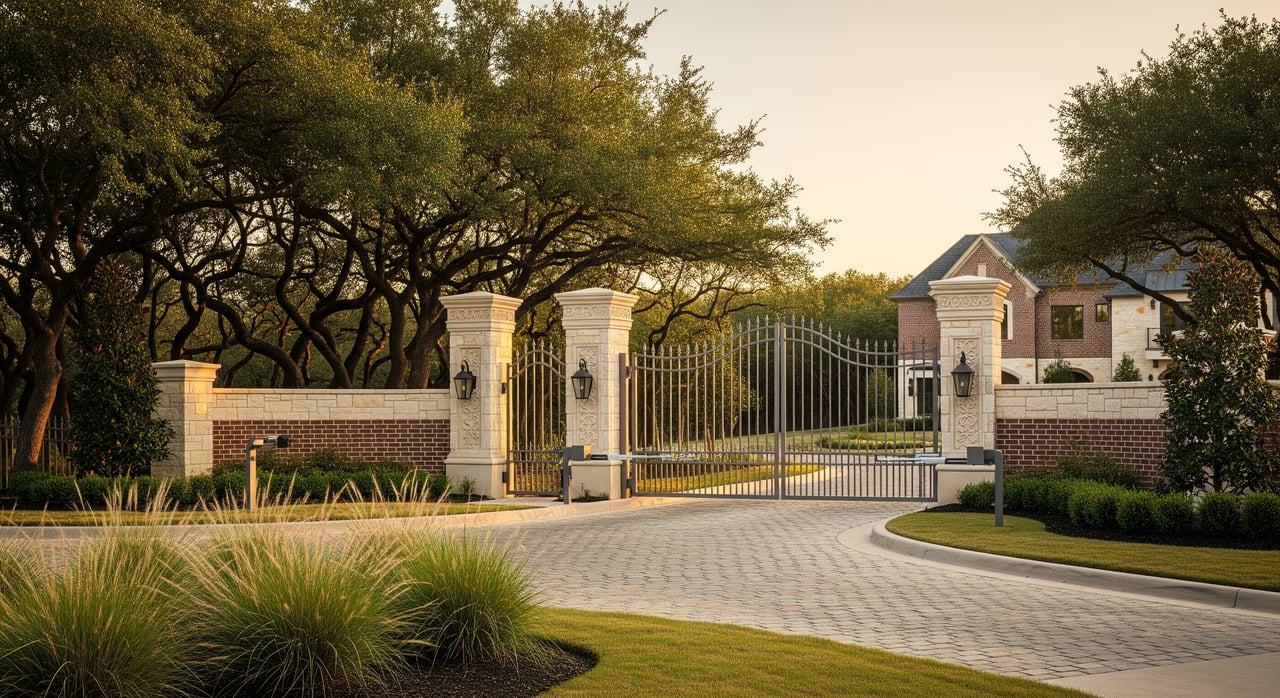
Planning a new fence or driveway gate in Fairview Estates? One small misstep can lead to delays, extra costs, or even a required tear‑down. You want privacy, security, and great curb appeal, but you also need to meet local code and any HOA standards. This guide explains the key rules in Fairview, how HOA approvals work, and what to know about automatic gates and emergency access. Let’s dive in.
What rules apply in Fairview Estates
You follow two layers of rules: the Town of Fairview code and any recorded HOA or deed restrictions for your lot. When they differ, the stricter rule controls. Start with the Town’s requirements, then confirm your subdivision’s covenants.
- Review the Town’s fence and wall regulations in the Town of Fairview Code.
- Find your subdivision’s recorded covenants and plats through the Collin County Clerk land records. Many neighborhoods use an Architectural Control Committee for approvals.
- Texas law also guides how HOAs handle architectural control and approvals. See the statute on Architectural Control Committees in the Texas Property Code §204.011.
Fairview fence basics you need to know
The Town code sets clear standards for height, materials, location, and safety. Always verify the latest version before you apply.
Height limits in Fairview
- Front yard fences: maximum 4 feet.
- Side and rear yard fences: maximum 6 feet.
- Screening walls in special cases: up to 8 feet with additional requirements.
Materials and design standards
- Front fencing should be an open design that allows visibility. The solid area of the front face is limited.
- Chain link is not allowed on residential lot lines. You may use it only inside your property for dog runs or similar uses.
- Solid privacy wood fencing that blocks visibility is generally not allowed unless a specific zone or provision permits it.
Pool enclosure rules
- Pools 3.5 feet deep or more must be fenced 4 to 6 feet high.
- Openings may not exceed six inches square.
- Gates must be self‑closing and self‑latching.
Safety, sight lines, and easements
- Do not block driver or bicyclist sight lines.
- Do not place a fence in a Town right of way or within 10 feet of a public street edge.
- Do not obstruct drainage easements, fire hydrants, or utility meters.
Permits, repairs, and inspections in Fairview
Most projects need a permit. The Town requires a permit to build any new fence or to repair or replace more than 40 percent of an existing fence in a calendar year. You will submit a plot plan showing the proposed fence line, pay the fee, and schedule inspection upon completion.
If you repair 40 to 60 percent, you must use like materials. If you repair 60 percent or more, you must replace the entire fence to current standards. The Town can issue citations for violations, and fines can be significant, especially for zoning or safety issues.
HOA and CC&R rules for Fairview Estates
If Fairview Estates has recorded covenants, they may require specific materials, colors, post styles, or landscaping, and they may limit front yard fences or driveway gates. Many communities require written ACC approval before work begins.
- Locate the covenants and plats through the Collin County Clerk land records or request them from the HOA or your title company.
- Texas law outlines how HOAs manage architectural control and approvals. Review Texas Property Code §204.011 for a sense of the process and authority.
- Recent Texas updates allow associations to regulate design and setbacks and, in some cases, require a driveway gate to be set back from the right of way. Always check your HOA guidelines and the recorded covenants before you design.
Gates, setbacks, and emergency access
Driveway gates and community gates must balance convenience with safety and emergency access.
Driveway gate setbacks
Texas legislation allows associations to require driveway gates to be set back at least 10 feet from the right of way when a driveway meets a laned roadway. See the bill text for context in SB 1668. Confirm any Town or HOA sight distance rules.
Automatic gate safety and access
Automatic gates should include a manual release for power failures and an approved way for first responders to enter. Texas Local Government Code Chapter 352 authorizes counties to require lockboxes or override mechanisms for gated access. Review Local Government Code Chapter 352 and check with the Fairview Fire Department for local requirements.
Step‑by‑step checklist to stay compliant
- Confirm your subdivision’s covenants and plats through the Collin County Clerk land records or your title company.
- Request your HOA’s design guidelines and ACC application, including any gate standards and timelines.
- Review the Town’s fence rules and prepare your plot plan. Apply for the permit before work starts.
- Verify easements and right of way on your survey or plat. Keep fences out of drainage easements and at least 10 feet from the pavement edge of public streets.
- Call before you dig. Contact Texas811 at least two business days before setting posts.
- For automatic gates, contact the Fairview Fire Department to confirm any required lockbox or key switch and manual release standards. Confirm HOA gate rules.
- Keep records. Save permits, inspection approvals, and any HOA sign‑offs for future disclosures.
Common Texas neighbor fence issues
Texas does not require neighbors to share the cost of a boundary fence unless there is an agreement or a covenant that says otherwise. Ownership and maintenance usually follow the survey and title documents. For an overview, see the State Law Library’s guide to Texas fences and boundaries. If a fence crosses the line or attaches to a neighbor’s fence, written agreements help avoid disputes during a sale.
Avoid costly fence and gate mistakes
- Skipping the Town permit for new work or large repairs.
- Choosing chain link for a lot line fence.
- Building a solid privacy fence where an open design is required.
- Placing a fence in a drainage or utility easement or too close to the street.
- Installing an automatic gate without emergency access provisions.
- Forgetting to call Texas811 before you dig.
If you want clarity before you list or buy in Fairview Estates, we can help you plan the smartest path to compliance and value. Reach out to Brian Abadie for calm, informed guidance tailored to your property.
FAQs
Do I need a Town of Fairview permit to build a fence in Fairview Estates?
- Yes. The Town requires a permit for any new fence and for repairs or replacements that exceed set thresholds within a calendar year.
What are the fence height limits in Fairview, Texas?
- In most cases, front yard fences are capped at 4 feet, side and rear yard fences at 6 feet, and special screening walls may reach 8 feet with added rules.
Can I use chain link for my property line fence in Fairview Estates?
- No. Chain link is not allowed for residential lot line fencing. It is limited to interior uses such as dog runs or gardens.
What are the rules for automatic driveway gates in Fairview Estates?
- Automatic gates should include manual release and approved emergency access. Setbacks and sight lines may apply, and your HOA may require specific designs and locations.
How do I find the HOA fence and gate rules for Fairview Estates?
- Request the recorded covenants and guidelines from the HOA or search the Collin County Clerk’s land records, then follow the ACC application process before building.
Who pays to repair a shared fence between neighbors in Texas?
- Unless you have a written agreement or a covenant stating otherwise, Texas law does not require a neighbor to share costs for a boundary fence.