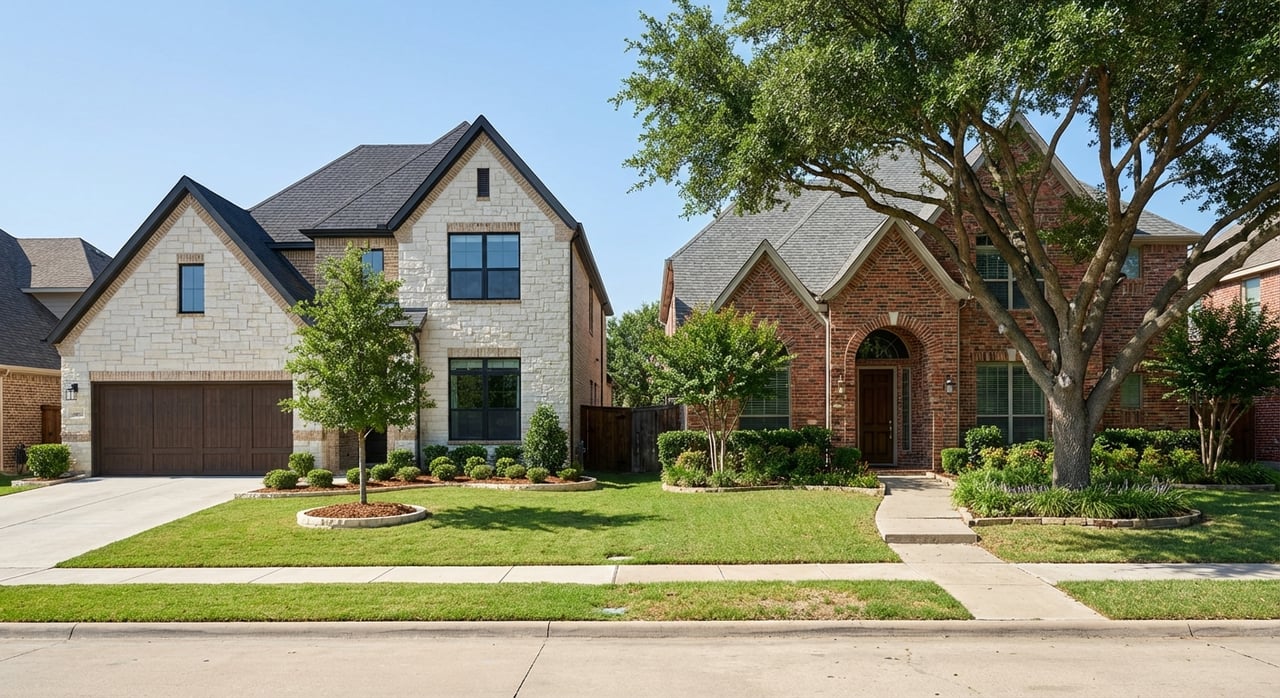
Are you torn between a gleaming new build and a character-rich resale in Frisco’s luxury market? You’re not alone. When you’re investing seven figures, the right choice should balance timing, design control, neighborhood feel, and long-term value. In this guide, you’ll get clear, local context plus a side-by-side look at timelines, customization, warranties, operating costs, and negotiation levers. Let’s dive in.
Frisco luxury at a glance
Frisco continues to grow quickly, and that momentum shapes both new-construction and resale opportunities. The median sale price sits near the mid-six figures, signaling a wide spread between mainstream listings and luxury inventory. Recent reporting shows a median sale price around $625,000, with upper-tier properties trading well above that level. Redfin’s Frisco market page highlights this dispersion.
Luxury in Frisco typically begins near the $1 million mark, with established enclaves often commanding higher price-per-square-foot due to lot quality, neighborhood character, and upgraded finishes. Many buyers weigh these premiums against the benefits of newer systems and modern layouts.
Population growth supports both new communities and strong resale demand. Frisco’s 2024 population estimate is in the mid-200,000s, underscoring sustained in-migration and development. You can see the city’s growth trend on U.S. Census QuickFacts.
Move-in timeline realities
New construction timing
Your timeline hinges on the type of build. Quick-move-in spec homes can close on a similar schedule to a resale once the home is ready. A typical production or semi-custom build often runs about 7 to 8 months from permits to completion, depending on selections, weather, and subcontractor capacity. Fully custom builds can extend beyond 12 months. These are representative national timelines that help set expectations, as outlined in Homes.com’s new-construction guide.
Resale timing
If speed matters most, resale is usually faster. A standard financed purchase often moves from accepted offer to close in roughly 30 to 45 days, assuming clean appraisal and underwriting. Cash purchases can be quicker, though move-out needs or repairs can add time. For buyers with fixed start dates or narrow windows, resale or a finished spec home reduces risk. See a general closing overview from Greiner Law.
Customization and design control
Production vs. semi-custom or custom
Production builders offer curated plan options and a design center experience where you select finishes, fixtures, and certain structural options. Early selections protect your schedule and budget. Semi-custom and custom builders allow more bespoke features and plan changes, but that added freedom typically increases both cost and time. If you crave exact materials, millwork, or room configurations and can be patient, a semi-custom or custom path can be worth it.
Resale with renovation
Resale gives you a finished neighborhood and an immediate move-in. If you love a particular lot or street, you can buy now and update on your own timeline. Renovations can be phased and tailored to your taste, but they do add cost and potential disruption. Comparing a new build’s price plus upgrades against a resale’s price plus renovation budget helps you pinpoint real value.
Warranties and first-year risk
Builder coverage
New homes commonly come with a 1-2-10 style warranty structure. That means 1 year for workmanship and materials, 2 years for major systems like plumbing and electrical distribution, and 10 years for qualifying structural defects. Always request the full warranty document, confirm the administrator, and ask whether the coverage is insurance-backed. Learn more about common coverage frameworks from 2-10 Home Buyers Warranty.
Resale coverage
Resale sellers sometimes include a 1-year home warranty service contract. These plans typically focus on appliance and system breakdowns, not structural coverage, and they come with caps and exclusions. Review terms closely so you understand what’s included and how claims work. For a helpful overview of what these plans usually cover, see This Old House’s guide.
Energy and maintenance
New homes can reduce early maintenance risk since roofs, HVAC, and appliances are new and often under warranty. Builders frequently tout energy-efficient features that can lower utility use compared with older stock. Large national builders publish HERS and ENERGY STAR data that show measurable efficiency gains over older homes; review the builder’s documentation if energy performance is important to you. For context, see KB Home’s disclosures in SEC filings regarding HERS targets and energy savings strategies in this investor document.
Neighborhood and lifestyle fit
Streetscape maturity
New master-planned communities in Frisco often feature modern amenity centers, pools, and walking trails. What they may lack initially is mature canopy and the deep, established shade you find in older areas. If you value large trees, finished streetscapes, and layered landscaping right away, a resale in a long-established neighborhood often delivers that on day one. If you prefer fresh infrastructure and contemporary amenities, new construction communities fit that profile.
Schools and services
Public services and school options are an important part of total value for many buyers. Frisco ISD publishes transparent tax rate information that can help you model carrying costs. Always verify current school assignments for a specific property address. For reference on tax rates, visit Frisco ISD’s tax rate history.
HOA and special districts
Many newer communities have HOAs and sometimes PID or MUD assessments that fund infrastructure and amenities. These charges can materially affect your monthly and annual costs and should be part of your apples-to-apples comparison. Review HOA rules, fee schedules, and any special district disclosures early. To understand local tax administration, consult the City’s resources at friscotexas.gov.
Negotiation and incentives
Builder levers
Builders often prefer to hold the base price and negotiate with incentives instead. You may see closing-cost credits, design-center allowances, and temporary mortgage rate buydowns through preferred lenders. These can meaningfully impact early cash outlay and monthly payments, but details matter. Always get them in writing and understand how a temporary buydown adjusts over time. For national context on current builder incentives, review Realtor.com’s reporting.
Resale levers
On resale, price, repair credits, and seller-paid closing costs are common negotiation points. Appraisals can influence how far you can push price if you’re financing. Market stats such as days on market and months of supply help gauge seller motivation. In softer months, motivated sellers may be more flexible on terms that reduce your near-term cash needs.
Cost snapshot: early-year math
To compare a new build and a resale luxury home on equal footing, map the first 1 to 3 years of ownership. Start with the purchase price, then layer in the items below:
New construction
- Lot premium and elevation or plan upgrades.
- Design-center selections and change orders.
- Preferred lender incentives and any rate buydown structure.
- HOA dues and any PID/MUD assessments.
- Insurance and utilities, noting energy-efficiency advantages where documented.
Resale luxury
- Inspection items, repair credits, or immediate fixes.
- Renovation scope, including design, permits, and occupancy impact.
- Potential near-term capital replacements like HVAC or roof if components are nearing end-of-life.
- HOA and tax structure for the specific subdivision and parcel.
Work from a simple spreadsheet so you can see total cash at closing, expected monthly cost, and any planned renovation cash over the first 24 months. That gives you a realistic picture of today’s price and tomorrow’s spend.
Decision checklist: pick your best path
Use these prompts before touring properties or visiting builder model homes.
Timeline and occupancy
- What is your latest acceptable move-in date? If it is under 3 months, focus on resale or a quick-move-in spec home.
Location and lot
- Do you need a specific commute pattern, neighborhood character, or school assignment? Confirm assignments directly with district resources such as Frisco ISD’s finance and tax pages.
Cost tolerance and value
- What maximum price or price-per-square-foot feels right for a new build versus a resale after factoring upgrades or renovation? Ask for itemized upgrade pricing and lot premiums.
Warranties and service process
- Which warranty covers what, who administers it, and is it transferable or insurance-backed? Request the full document and ask about average response times. Start with norms described by 2-10 Home Buyers Warranty.
Inspections and verification
- For a build, will the builder allow independent inspections at key stages like pre-drywall and final? For resale, which repairs will the seller complete versus crediting at closing? Review best practices in Homes.com’s new-construction overview.
Incentives and financing
- What incentives are available, and are they tied to using a preferred lender or title company? If a rate buydown is offered, model your payment after it resets. You can compare options with recent trends covered by Realtor.com.
HOA, assessments, and taxes
- Obtain HOA covenants, the current budget, and any known future assessments. Confirm whether the property sits in a PID or MUD and model property taxes using City resources and district pages such as Frisco ISD’s tax rate history.
Bottom line: who should buy what
- Choose new construction if you want modern systems, energy-efficient performance, and defined warranty coverage, and you have the flexibility to wait for the build. Incentives can soften the early costs.
- Choose resale if you value mature streetscapes, larger established landscaping, or a specific lot in an established enclave, and you want a faster, lower-risk closing window. Plan for renovation or near-term replacements if the home is older.
When you balance timeline, design control, warranty protection, and neighborhood feel against your budget, the right path usually becomes clear.
Ready to compare real options in Frisco with a calm, boutique approach? Partner with Brian Abadie to map your must-haves, tour curated properties or model homes, and negotiate with confidence.
FAQs
What counts as a luxury home in Frisco?
- In Frisco, luxury often begins near $1 million, with established neighborhoods and premium lots commanding higher price-per-square-foot than the city average.
How long does a Frisco new build usually take?
- A production or semi-custom build commonly takes about 7 to 8 months from permits to completion, while fully custom homes can exceed 12 months, depending on scope and conditions.
Are builders offering incentives on new luxury homes?
- Many builders use incentives such as closing-cost credits, design allowances, or temporary rate buydowns; always get terms in writing and review how a buydown resets.
Do new homes use less energy than older luxury homes?
- New construction often incorporates energy-efficient systems that can lower utility use compared with older homes; verify the builder’s HERS or ENERGY STAR documentation to quantify potential savings.
How fast can I close on a resale luxury home in Frisco?
- Many financed resale transactions close in roughly 30 to 45 days, depending on appraisal, underwriting, and any agreed repairs or seller move-out needs.